
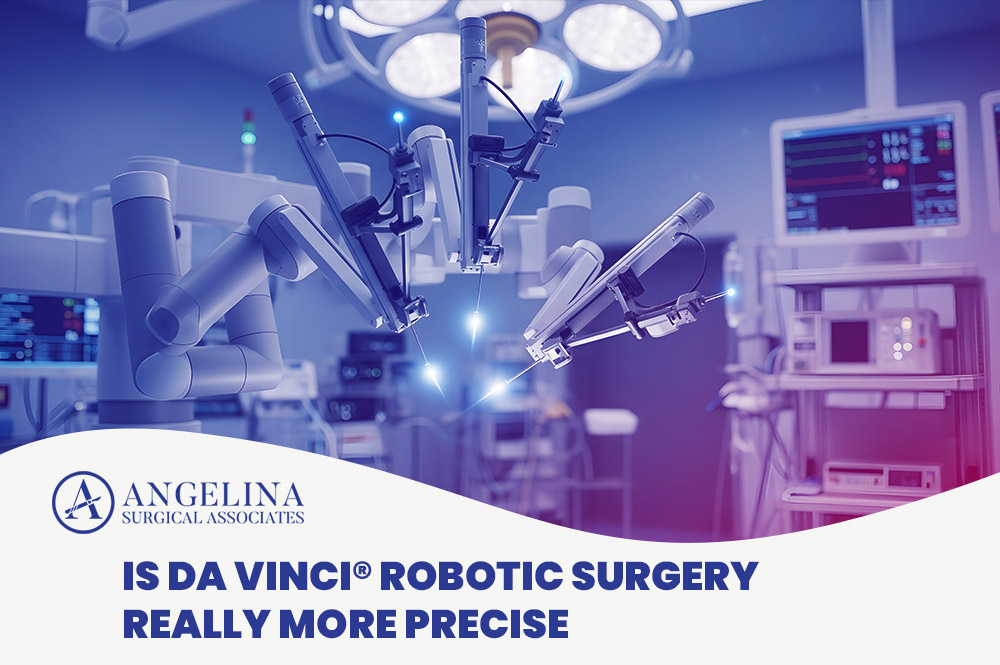
Overview: Is da Vinci® robotic surgery more precise? Learn how precision works, what it means for patients, and when it truly makes a difference!
Robotic-assisted surgery is often described as highly precise, but for many patients, that claim can feel abstract. What does “more precise” actually mean in the operating room, and does it translate into better outcomes?
The da Vinci® robotic surgical system is designed to enhance a surgeon’s capabilities, not replace them. Understanding how that precision works helps patients make informed decisions without over-promising what technology alone can do.
What Does “Precision” Mean in Robotic Surgery?
In surgical terms, precision refers to controlled movement, accuracy in tissue handling, and the ability to operate in confined spaces without unnecessary disruption. The da Vinci® system allows surgeons to scale their hand movements into smaller, refined motions while filtering out natural tremor.
This can be particularly important when operating near nerves, blood vessels, or other delicate structures where millimeters matter.
Also Read >> Precision, Accuracy, and Detail: Robotic Surgery Explained
How Does the da Vinci® System Improve Accuracy?
The system provides a high-definition, three-dimensional view of the surgical field. Unlike traditional laparoscopy, this view offers depth perception and magnification, allowing surgeons to identify tissue layers clearly and anatomical landmarks.
The robotic instruments also articulate more freely than standard tools, mimicking the movement of the human wrist but with greater stability. This combination supports careful dissection and precise suturing.
Is Robotic Precision Better Than Traditional Surgery?
Robotic-assisted surgery can offer advantages over open or standard laparoscopic techniques in certain procedures. Smaller, more controlled movements may reduce tissue trauma and improve consistency during complex steps.
However, precision still depends heavily on surgeon training and experience. The technology enhances skill; it does not replace sound surgical judgment.
Does Increased Precision Affect Recovery?
Greater precision may lead to smaller incisions, reduced blood loss, and less disruption of surrounding tissue. For many patients, this can translate into less postoperative pain and a smoother recovery.
That said, recovery outcomes also depend on the procedure itself, overall health, and adherence to post-operative instructions.
Are There Situations Where Precision Matters More?
Robotic precision is especially valuable in surgeries involving confined anatomy or multiple critical structures. Hernia repairs, colorectal surgery, and procedures near the diaphragm or pelvis are examples where enhanced visualization and controlled movement can be beneficial.
Not every surgery requires this level of technology, which is why individualized evaluation remains important.
Is da Vinci® Robotic Surgery Always the Best Option?
While robotic-assisted surgery offers meaningful advantages, it is not the right choice for every patient or condition. Factors such as anatomy, surgical goals, and prior operations influence whether robotic assistance adds value.
A thoughtful discussion with a surgeon helps determine when precision-enhancing technology is appropriate and when other approaches may be equally effective.
Frequently Asked Questions (FAQs)
Is the da Vinci® robot performing the surgery on its own?
No. The surgeon controls every movement. The system responds only to the surgeon’s actions.
Does robotic surgery reduce the risk of complications?
It may reduce certain risks in appropriate cases, but outcomes depend on the procedure and surgeon experience.
Is robotic-assisted surgery more expensive?
Costs vary by procedure and insurance coverage. Your care team can help clarify what applies to your situation.
Final Words
The da Vinci® robotic surgical system offers real precision benefits by enhancing a surgeon’s control, visualization, and accuracy. For many procedures, this can support safer surgery and a more manageable recovery.
Precision alone does not guarantee outcomes, but when paired with experience and proper patient selection, it can make a meaningful difference.
Curious whether robotic-assisted surgery is right for your condition? Learn more or schedule a consultation with Angelina Surgical.