
Overview: What is an endoscopy and why is it done? Learn how it works, what to expect, and when your doctor may recommend this test!
Hearing that you may need an endoscopy can bring up a lot of questions—and sometimes a bit of anxiety. Will it be painful? Why is it necessary? What exactly are they looking for?
The good news is that an endoscopy is a common, minimally invasive procedure that helps doctors understand what’s happening inside your digestive system. In many cases, it provides answers that other tests simply cannot.
Understanding why it’s recommended, and what to expect, can make the experience feel far more manageable.
What Does an Endoscopy Actually Involve?
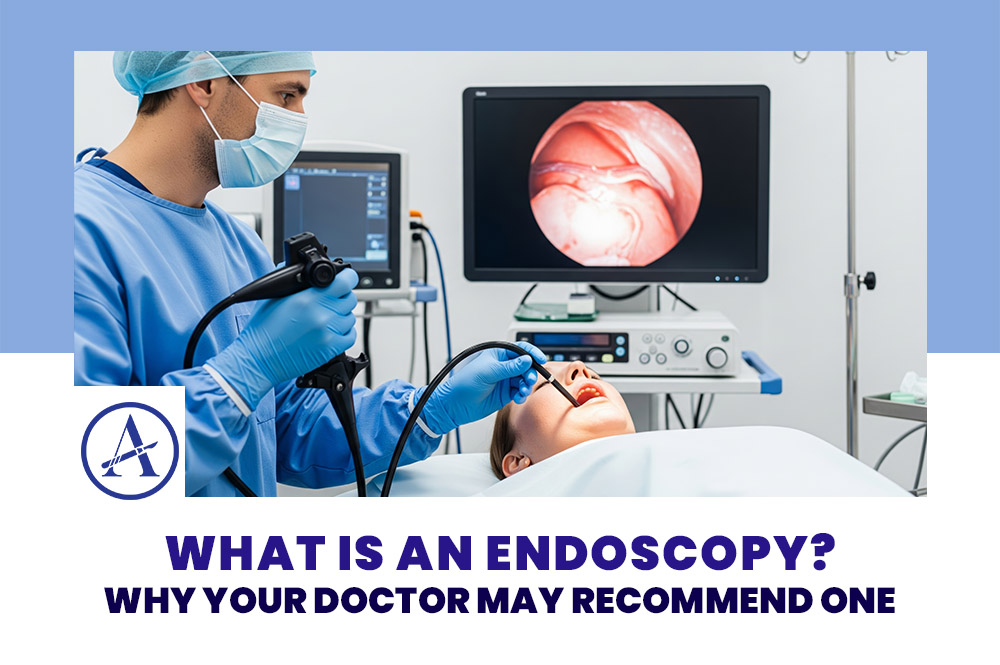
An endoscopy is a procedure that allows a doctor to look directly inside the upper digestive tract using a thin, flexible tube called an endoscope.
The scope has a light and a camera at its tip, which sends real-time images to a screen. This allows the doctor to examine the esophagus, stomach, and the beginning of the small intestine.
The procedure is usually done with sedation, so patients remain comfortable and relaxed throughout.
Also Read >> Reasons to Have an Endoscopy: Spot the Signs
Why Would a Doctor Recommend an Endoscopy?
An endoscopy is not done without reason—it is typically recommended when symptoms need closer evaluation.
Common reasons include:
-
Persistent heartburn or acid reflux
-
Difficulty swallowing
-
Unexplained abdominal pain
-
Chronic nausea or vomiting
-
Gastrointestinal bleeding
-
Monitoring conditions like GERD or ulcers
In some cases, it’s also used as a screening or follow-up tool for certain conditions.
What Can an Endoscopy Detect That Other Tests Can’t?
Unlike imaging tests, an endoscopy allows direct visualization of the digestive tract.
Detecting Inflammation and Damage
Doctors can identify irritation, ulcers, or inflammation in real time.
Identifying Structural Problems
Conditions such as strictures (narrowing), hiatal hernias, or abnormal growths can be seen clearly.
Taking Biopsies When Needed
If something looks unusual, small tissue samples can be taken during the procedure for further analysis.
This combination of visualization and immediate action makes endoscopy a powerful diagnostic tool.
What Should You Expect During the Procedure?
The procedure itself is typically short, often lasting 15 to 30 minutes.
Patients are given sedation to ensure comfort. The endoscope is gently guided through the mouth and into the digestive tract. Because of sedation, most patients have little to no memory of the procedure.
Afterward, mild throat soreness or bloating may occur, but these symptoms usually resolve quickly.
Is Endoscopy Safe?
Yes. Endoscopy is widely considered a safe procedure when performed by trained professionals.
Complications are uncommon, but as with any medical procedure, there are small risks such as bleeding or reaction to sedation. Your care team will review these with you beforehand.
The benefit of accurate diagnosis often outweighs the minimal risks involved.
When Should You Not Delay an Endoscopy?
Certain symptoms should not be ignored and may require prompt evaluation:
-
Difficulty swallowing that worsens
-
Unexplained weight loss
-
Persistent vomiting
-
Signs of bleeding (such as black stools or vomiting blood)
In these cases, an endoscopy helps identify the cause early and guide appropriate treatment.
Frequently Asked Questions (FAQs)
Is an endoscopy painful?
No. Most patients are sedated and feel little to no discomfort during the procedure.
How long does it take to recover after an endoscopy?
Recovery is usually quick. Most patients return to normal activities within a day.
Do I need to prepare for an endoscopy?
Yes. You’ll typically need to fast for several hours before the procedure. Your provider will give specific instructions.
Final Words
An endoscopy is not just a test but a way to get clear, direct answers about your digestive health. While the idea of the procedure can feel intimidating at first, most patients find it far easier than expected.
If your doctor recommends an endoscopy, it’s usually because it offers the most accurate and efficient path to understanding your symptoms and moving forward with care.
Need answers about your digestive symptoms or considering an endoscopy? Let’s schedule a consultation with Angelina Surgical.