
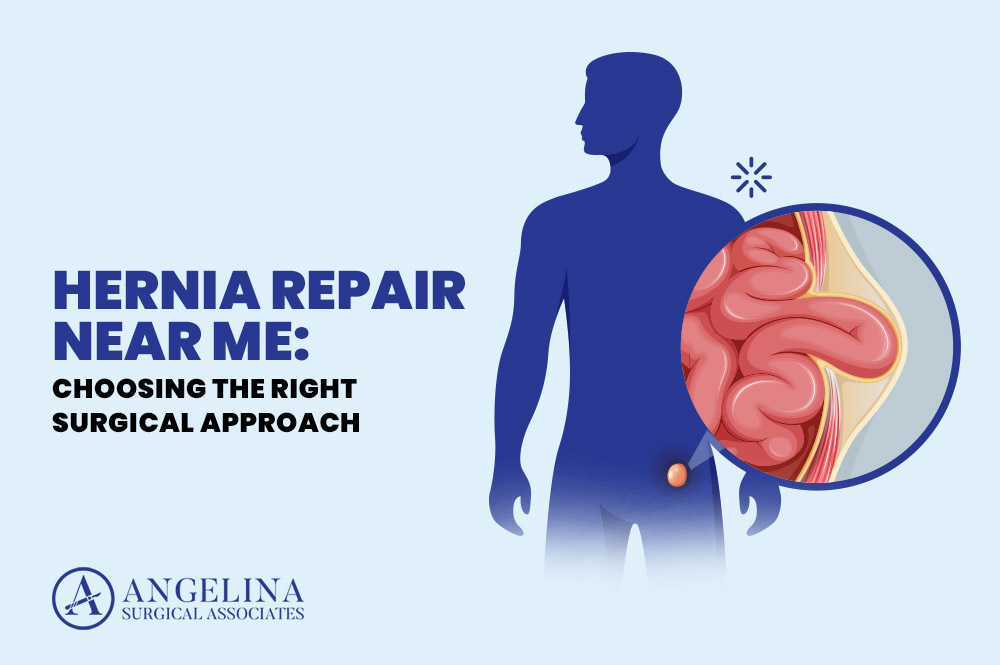
Overview: Looking for hernia repair in Lufkin or East Texas? Learn the differences between open, laparoscopic, and robotic hernia surgery options!
Living with a hernia can be more disruptive than many people expect. What may begin as mild pressure or a small bulge can slowly turn into daily discomfort, activity limitations, and constant awareness that something “just doesn’t feel right.”
For some patients, even simple tasks like lifting groceries, exercising, standing for long periods, or getting through a workday become increasingly uncomfortable.
One of the biggest frustrations is uncertainty; not just about the hernia itself, but about what comes next. Should you wait? Will it get worse? And if surgery is needed, how do you know which approach is right for you?
For patients throughout Lufkin and the greater East Texas region, understanding the differences between modern hernia repair options can make the decision feel far less overwhelming.
Why Is Choosing the Right Hernia Repair Approach So Important?
Not all hernias are the same, and not all repairs are performed the same way. The ideal surgical approach depends on several factors, including:
-
The type and size of the hernia
-
Whether it’s a first-time or recurrent hernia
-
Your overall health and activity level
-
Previous abdominal surgeries
-
Symptom severity and risk of complications
The goal is not simply to repair the hernia; it’s to choose the approach that offers the safest repair and best long-term outcome for your specific situation.
When Is Open Hernia Surgery Recommended?
Open hernia repair is the traditional surgical method and remains highly effective in many cases.
During the procedure, an incision is made directly over the hernia site so the weakened tissue can be repaired, often with mesh reinforcement for added support.
Open surgery may be recommended for:
-
Larger ventral or incisional hernias
-
Complex abdominal wall defects
-
Emergency hernia situations
-
Patients who may not be candidates for minimally invasive surgery
While recovery can involve more early soreness due to the larger incision, open repair continues to provide durable and reliable results.
What Makes Laparoscopic Hernia Repair Different?
Laparoscopic hernia surgery uses several small incisions instead of one larger opening. A camera and specialized instruments are inserted to repair the hernia from inside the abdomen.
For many patients in East Texas looking to minimize downtime, laparoscopic repair may offer:
-
Smaller scars
-
Reduced postoperative discomfort
-
Faster return to light activity
-
Shorter recovery periods in some cases
This approach is commonly considered for bilateral groin hernias and some recurrent hernias after prior open repair.
How Does Robotic Hernia Surgery Improve Precision?
Robotic-assisted hernia surgery builds on minimally invasive techniques by enhancing visualization and instrument control.
The surgeon operates from a console using robotic instruments that allow greater flexibility and refined movement inside the body. This can be especially helpful in more complex hernia repairs where careful suturing and tissue handling matter.
Robotic repair may be beneficial for:
-
Ventral hernias
-
Incisional hernias
-
Complex abdominal wall reconstruction
-
Certain inguinal hernias
The technology does not replace the surgeon; it enhances the surgeon’s ability to operate with precision in confined spaces.
Also Read >> Robotic Hernia Surgery: How It’s Done, Recovery, and Side Effects
Does One Hernia Surgery Method Recover Faster Than Another?
Recovery depends on the hernia itself as much as the surgical technique.
In general:
-
Open surgery may involve more early discomfort
-
Minimally invasive approaches often allow earlier mobility
-
Robotic and laparoscopic procedures typically use smaller incisions
However, long-term success depends on proper healing, activity restrictions, and surgical expertise, not simply incision size alone.
How Do You Know Which Approach Is Right for You?
The best surgical plan comes from individualized evaluation—not from choosing the newest technology automatically.
A proper consultation considers:
-
Your symptoms
-
Imaging findings
-
Lifestyle and work demands
-
Overall health
-
Hernia complexity
For patients across Lufkin and the greater East Texas region, the focus should always be on finding the safest and most effective repair for long-term comfort and function.
Frequently Asked Questions (FAQs)
Is robotic hernia surgery better than open surgery?
Not necessarily. The best approach depends on the type of hernia, patient health, and surgical complexity.
How long does hernia surgery recovery usually take?
Most patients return to light activity within a few weeks, though full recovery varies by procedure and hernia size.
Can a hernia come back after surgery?
Recurrence is possible, but proper repair technique and recovery precautions help reduce the risk.
Final Words
Choosing hernia surgery is not just about fixing a bulge—it’s about getting back to daily life without ongoing discomfort, limitations, or uncertainty.
Open, laparoscopic, and robotic hernia repair each have important roles in modern surgery. The key is understanding which approach best fits your condition, goals, and recovery needs.
With the right evaluation and treatment plan, hernia repair can provide lasting relief and renewed confidence in everyday movement and activity.
Looking for hernia repair options in Lufkin or the greater East Texas region? We’re here to take the load off your shoulders.
Get in touch with professionals at Angelina Surgical.