
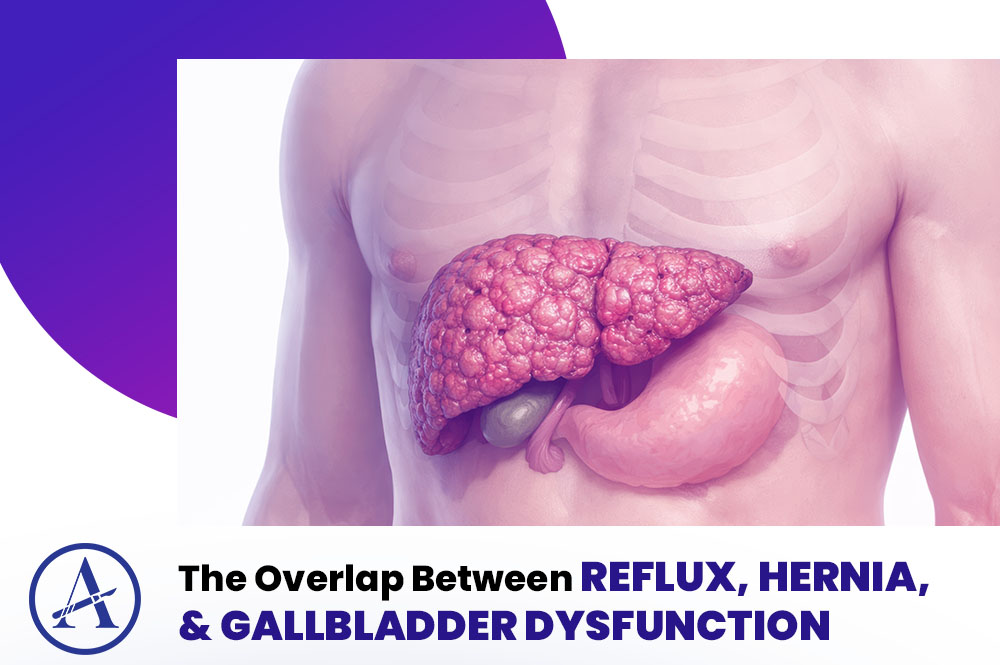
Overview: Reflux, hernia, and gallbladder dysfunction share overlapping symptoms that are often misdiagnosed. Here’s what patients in Lufkin and East Texas need to know!
Digestive discomfort is rarely straightforward.
Many patients in Lufkin and the greater East Texas region live with persistent symptoms — heartburn, bloating, upper abdominal pain, nausea, without ever receiving a clear diagnosis. What makes these conditions particularly challenging is that reflux, hernias, and gallbladder dysfunction can look remarkably similar on the surface, even when the underlying causes are entirely different.
Understanding how these 3 conditions overlap is the first step toward getting the right diagnosis and the right treatment.
What Is the Connection Between Reflux, Hernia, and Gallbladder Dysfunction?
These three conditions are distinct in their origins but frequently intersect in the symptoms they produce. In some cases, they occur simultaneously, making accurate diagnosis more complex and more important.
Why Are These 3 Conditions So Often Confused With Each Other?
All three conditions can produce:
-
Upper abdominal pain or discomfort
-
Nausea and bloating after eating
-
A sensation of fullness or pressure in the chest or abdomen
-
Symptoms that worsen with certain foods or after meals
-
Disrupted sleep due to nighttime discomfort
Without proper diagnostic evaluation, it is easy for one condition to be treated while another goes undetected.
How Does Acid Reflux Relate to Hiatal Hernia?
Acid reflux and hiatal hernia are among the most closely connected conditions in digestive health, and one frequently contributes to the other.
What Is a Hiatal Hernia and How Does It Cause Reflux?
A hiatal hernia occurs when part of the stomach pushes upward through the diaphragm into the chest cavity. This displacement weakens the lower oesophageal sphincter, the valve that prevents stomach acid from travelling back up into the oesophagus, making acid reflux significantly more likely and more severe.
Can You Have Reflux Without a Hiatal Hernia?
Yes! Reflux can occur independently of a hernia, but patients with an undiagnosed hiatal hernia who are only treated for reflux may find that symptoms persist or worsen over time.
Treating reflux without identifying an underlying hernia often leads to long-term reliance on medication without meaningful relief.
How Does Gallbladder Dysfunction Overlap With Reflux and Hernia Symptoms?
Gallbladder dysfunction, including gallstones, biliary dyskinesia, and chronic cholecystitis, produces symptoms that overlap significantly with both reflux and hernia presentations.
Also Read >> Gallbladder Disease & GERD Are Connected: What You Need to Know
What Gallbladder Symptoms Are Most Commonly Mistaken for Reflux?
Gallbladder-related symptoms frequently mis-attributed to reflux include:
-
Burning or pressure in the upper abdomen after fatty meals
-
Nausea and bloating that mimics heartburn
-
Right-sided upper abdominal discomfort that radiates to the shoulder
-
Symptoms that intensify after eating fried or rich foods
Can a Patient Have Both Gallbladder Dysfunction and a Hernia?
Yes, and this combination is more common than many patients realize. When multiple conditions are present simultaneously, symptoms can be more severe and harder to isolate. A thorough surgical evaluation is essential to identify all contributing factors rather than treating each symptom in isolation.
Why Is Accurate Diagnosis So Important for These Overlapping Conditions?
Misdiagnosis or incomplete diagnosis leads to treatments that address symptoms without resolving the underlying cause, leaving patients cycling through medications and appointments without lasting improvement.
What Diagnostic Tools Are Used to Distinguish These Conditions?
A comprehensive evaluation may include:
-
Upper endoscopy to assess reflux and hiatal hernia
-
Abdominal ultrasound to evaluate gallbladder function and gallstones
-
HIDA scan to measure gallbladder ejection fraction
-
Oesophageal manometry and pH monitoring for reflux severity
-
CT imaging where indicated
When Should a Patient See a Surgeon Rather Than a General Practitioner?
When symptoms are persistent, worsening, or not responding to conservative treatment, a surgical consultation is warranted. A specialist can evaluate whether surgical intervention, such as hernia repair, fundoplication for reflux, or laparoscopic cholecystectomy for gallbladder removal is the most appropriate path forward.
Frequently Asked Questions (FAQs)
Can reflux, hernia, and gallbladder problems all be present at the same time?
Yes. It is not uncommon for patients to present with more than one of these conditions simultaneously. A thorough diagnostic workup is the only reliable way to identify all contributing factors.
Is surgery always required for these conditions?
Not always. Treatment depends on the severity and nature of each condition. However, for hernias and significant gallbladder dysfunction, surgical intervention is often the most effective long-term solution.
Getting the Right Diagnosis Changes Everything
Living with unresolved digestive symptoms is frustrating, especially when treatments aren’t delivering results. For patients in Lufkin and across the greater East Texas region, understanding the overlap between reflux, hernia, and gallbladder dysfunction is the starting point for finding real answers.
A specialist evaluation can identify what’s actually driving your symptoms and map out a clear path to relief.
Angelina Surgical Associates provides expert surgical evaluation and treatment for reflux, hernia, and gallbladder conditions, serving patients throughout Lufkin and the greater East Texas region with compassionate, patient-focused care.