
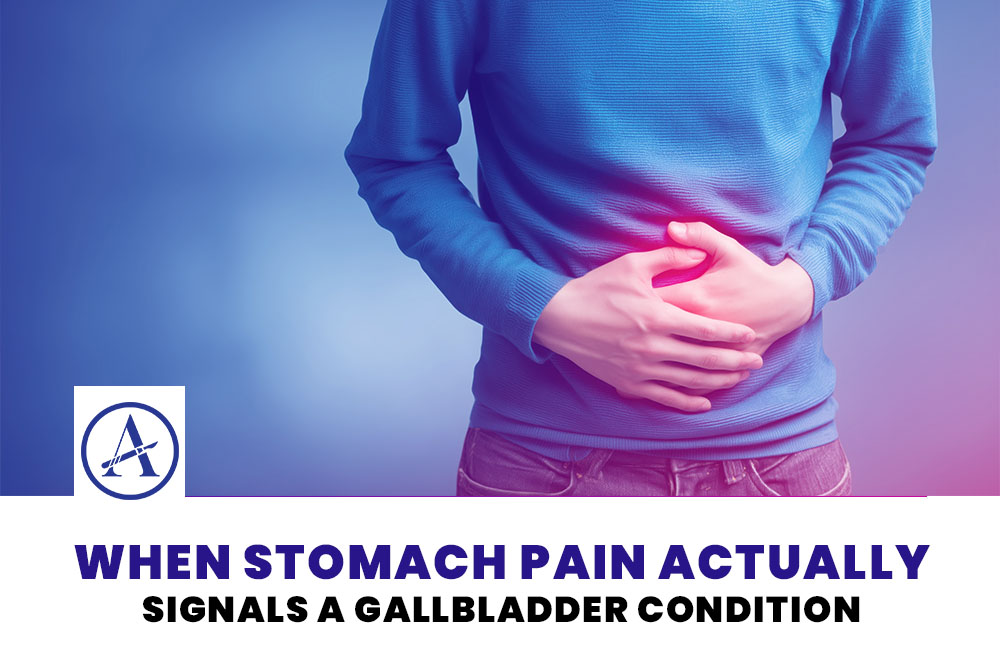
Overview: Stomach pain is one of the most common reasons patients seek medical care, but it isn’t always a stomach problem. Here’s how to recognize when gallbladder dysfunction may be the real cause!
Gallbladder disease affects more than 25 million Americans, and many don’t know they have it.
For patients in Lufkin and the greater East Texas region, persistent stomach pain is one of the most common reasons to seek medical attention. But what surprises many is how frequently that pain has nothing to do with the stomach itself. The gallbladder, a small organ tucked beneath the liver is responsible for a far greater share of abdominal discomfort than most patients realize.
Recognizing the difference between general stomach pain and gallbladder-related symptoms can be the turning point toward getting the right diagnosis.
What Does the Gallbladder Do — and What Happens When It Fails?
The gallbladder stores bile produced by the liver and releases it into the small intestine to aid in fat digestion. When the gallbladder isn’t functioning properly — due to gallstones, inflammation, or poor motility — that digestive process is disrupted, and pain follows.
What Are the Most Common Gallbladder Conditions That Cause Stomach Pain?
The gallbladder conditions most frequently behind abdominal discomfort include:
-
Gallstones (cholelithiasis) — hardened deposits that block bile flow and trigger sharp pain episodes
-
Chronic cholecystitis — ongoing gallbladder inflammation producing persistent, dull abdominal discomfort
-
Biliary dyskinesia — a motility disorder where the gallbladder fails to empty properly despite no visible stones
-
Acute cholecystitis — sudden gallbladder inflammation requiring prompt medical attention
-
Choledocholithiasis — gallstones that have migrated into the bile duct, causing more severe symptoms
How Do You Know If Stomach Pain Is Coming From the Gallbladder?
This is where many patients — and even some clinicians — get tripped up. Gallbladder pain mimics a wide range of digestive complaints, making it easy to misattribute to acid reflux, gastritis, or irritable bowel syndrome.
Where Is Gallbladder Pain Typically Located?
Unlike general stomach pain, gallbladder discomfort tends to be:
-
Concentrated in the upper right quadrant of the abdomen
-
Radiating toward the right shoulder or between the shoulder blades
-
Triggered specifically by fatty, fried, or rich meals
-
Occurring in episodes that build in intensity before subsiding
-
Accompanied by nausea, bloating, or vomiting during an attack
What Is a Gallbladder Attack and How Long Does It Last?
A gallbladder attack, also called biliary colic, typically begins within one to two hours of eating a fatty meal. The pain intensifies steadily, can last anywhere from 30 minutes to several hours, and then eases as the gallbladder relaxes. Unlike general indigestion, the pain during a gallbladder attack is often severe enough to be mistaken for a cardiac event.
Which Digestive Symptoms Are Most Commonly Linked to Gallbladder Dysfunction?
Yes. Patients with gallbladder dysfunction frequently report a broader range of symptoms, including:
-
Chronic bloating and gas that worsens after meals
-
Persistent nausea without a clear dietary trigger
-
Intolerance to fatty or greasy foods
-
Jaundice — yellowing of the skin or eyes, when bile flow is significantly obstructed
-
Light-colored stools or dark urine in more advanced cases
Also Read >> Signs Your Digestive Issues Might Be Gallbladder-Related
What Are the Warning Signs That Require Prompt Medical Attention?
Patients in Lufkin and East Texas should seek prompt evaluation if stomach pain is accompanied by:
-
Fever and chills alongside abdominal pain
-
Yellowing of the skin or eyes
-
Pain that is severe, sudden, and unrelenting
-
Vomiting that prevents keeping food or fluids down
-
Pain that has been recurring over weeks or months without explanation
What Diagnostic Tests Confirm a Gallbladder Problem?
A thorough gallbladder evaluation typically includes:
-
Abdominal ultrasound — the first-line imaging tool for detecting gallstones
-
HIDA scan — measures gallbladder function and ejection fraction
-
CT imaging — provides detailed structural assessment when complications are suspected
-
Blood tests — identify infection, inflammation, or bile duct obstruction
-
MRI or MRCP — evaluates the bile ducts for stones or blockages
Frequently Asked Questions (FAQs)
Can you have gallbladder problems without gallstones?
Yes. Biliary dyskinesia is a gallbladder motility disorder that produces significant symptoms without any visible stones. A HIDA scan is often needed to diagnose this condition accurately.
Is gallbladder removal the only treatment option?
For most patients with symptomatic gallbladder disease, laparoscopic cholecystectomy, minimally invasive gallbladder removal is the most effective and lasting solution.
Stomach Pain That Keeps Coming Back Deserves a Real Answer
Recurring abdominal pain that doesn’t respond to dietary changes or over-the-counter remedies is worth investigating further. For patients across Lufkin and the greater East Texas region, gallbladder dysfunction is one of the most commonly overlooked causes of persistent stomach pain, and one of the most treatable.
A specialist evaluation is the clearest path to understanding what’s driving your symptoms and what can be done about it.
At Angelina Surgical Associates, we pride ourselves at providing expert gallbladder evaluation and minimally invasive surgical care for patients throughout Lufkin and the greater East Texas region, delivering accurate diagnosis and patient-centered treatment every step of the way.