
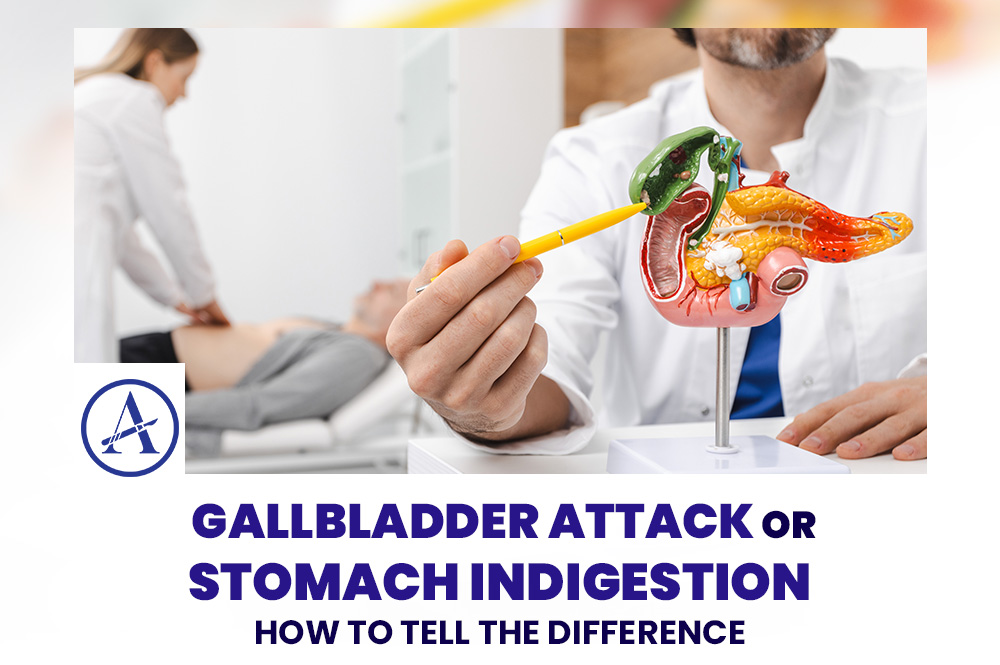
Overview: Is it a gallbladder attack or indigestion? Learn the key differences, warning signs, and when to seek medical care in Lufkin, TX!
Almost everyone has experienced indigestion at some point. Maybe it was after a large holiday meal, a spicy dinner, or eating too quickly. The discomfort usually fades within a few hours, and life goes on.
But what if it doesn’t?
Many people experiencing their first gallbladder attack assume it’s nothing more than bad indigestion. They take an antacid, wait it out, and hope the pain disappears. Unfortunately, gallbladder disease often disguises itself as ordinary digestive discomfort in its early stages, making it easy to overlook.
Knowing the difference between temporary indigestion and a gallbladder attack can help you seek treatment before the condition becomes more serious. For patients throughout Lufkin and the greater East Texas region, recognizing these warning signs is an important first step toward getting lasting relief.
What Does Ordinary Indigestion Usually Feel Like?
Indigestion, also called dyspepsia, is often related to how or what you eat.
Common symptoms include:
-
A feeling of fullness after eating
-
Mild bloating
-
Burping
-
Heartburn
-
Burning discomfort in the upper abdomen
-
Temporary nausea
These symptoms often improve with time, dietary changes, or over-the-counter medications. While uncomfortable, indigestion is usually short-lived and doesn’t typically cause severe pain.
What Does a Gallbladder Attack Feel Like?
A gallbladder attack tends to feel very different.
Rather than mild discomfort, patients often describe a sudden, intense pain in the upper right side of the abdomen or the center of the upper stomach. The pain may build rapidly and remain steady instead of coming and going.
Many people also experience pain that spreads to the:
-
Right shoulder
-
Upper back
-
Area between the shoulder blades
Unlike indigestion, changing positions or taking antacids usually provides little or no relief.
Related Reading: What Does a Gallbladder Attack Feel Like?
Why Do Gallbladder Attacks Often Happen After Eating?
The gallbladder stores bile, a digestive fluid that helps break down fats.
After eating, especially a meal high in fat—the gallbladder contracts to release bile into the digestive tract. If gallstones block the normal flow of bile, pressure builds inside the gallbladder, causing significant pain.
This is why many gallbladder attacks occur within a few hours after eating foods such as:
-
Fried foods
-
Pizza
-
Burgers
-
Cream-based dishes
-
Rich desserts
Patients often notice a pattern of symptoms appearing after similar meals.
When Should You Be Concerned It’s More Than Indigestion?
While occasional indigestion is common, certain symptoms suggest a more serious problem.
Seek medical evaluation if you experience:
-
Severe upper abdominal pain lasting several hours
-
Pain that radiates to the back or right shoulder
-
Fever or chills
-
Persistent nausea or vomiting
-
Yellowing of the skin or eyes (jaundice)
-
Dark urine or pale-colored stools
These symptoms may indicate gallbladder inflammation or a blockage of the bile ducts, both of which require prompt medical attention.
How Is Gallbladder Disease Diagnosed?
Because gallbladder symptoms often resemble acid reflux, ulcers, or indigestion, an accurate diagnosis requires more than symptoms alone.
A healthcare provider may recommend:
-
A physical examination
-
Blood tests
-
An abdominal ultrasound
-
Additional imaging when necessary
These tests help determine whether gallstones, inflammation, or another digestive condition is causing your symptoms.
According to the National Institute of Diabetes and Digestive and Kidney Diseases (NIDDK), abdominal ultrasound is the most common imaging test used to detect gallstones and evaluate gallbladder disease.
When Is Gallbladder Surgery Recommended?
Not everyone with gallstones requires surgery. In fact, many people have gallstones without ever experiencing symptoms.
However, when gallbladder attacks become frequent, painful, or begin affecting your quality of life, surgical removal of the gallbladder—called a cholecystectomy—is often the most effective treatment.
Today, many patients are candidates for minimally invasive or robotic-assisted gallbladder surgery, allowing for smaller incisions and a smoother recovery than traditional open procedures.
Frequently Asked Questions (FAQs)
Can a gallbladder attack feel like heartburn?
Yes. Early gallbladder attacks can mimic heartburn or indigestion, which is why persistent or recurring symptoms should be evaluated.
How long does a gallbladder attack usually last?
A gallbladder attack often lasts from 30 minutes to several hours. Pain that persists or worsens should be assessed by a healthcare provider.
Can gallstones go away without surgery?
Gallstones usually do not disappear on their own. If they are causing symptoms or complications, gallbladder removal is often the recommended treatment.
Final Words
It’s easy to dismiss abdominal discomfort as indigestion, especially when symptoms seem to come and go. But when pain becomes severe, repeatedly follows meals, or spreads to your back or shoulder, your gallbladder may be signaling that something more serious is happening.
For patients throughout Lufkin and the greater East Texas region, early evaluation by a team of experts is something you shouldn’t overlook. It can help identify gallbladder disease before complications develop. Getting the right diagnosis is the first step toward finding lasting relief and returning to the foods and activities you enjoy.