
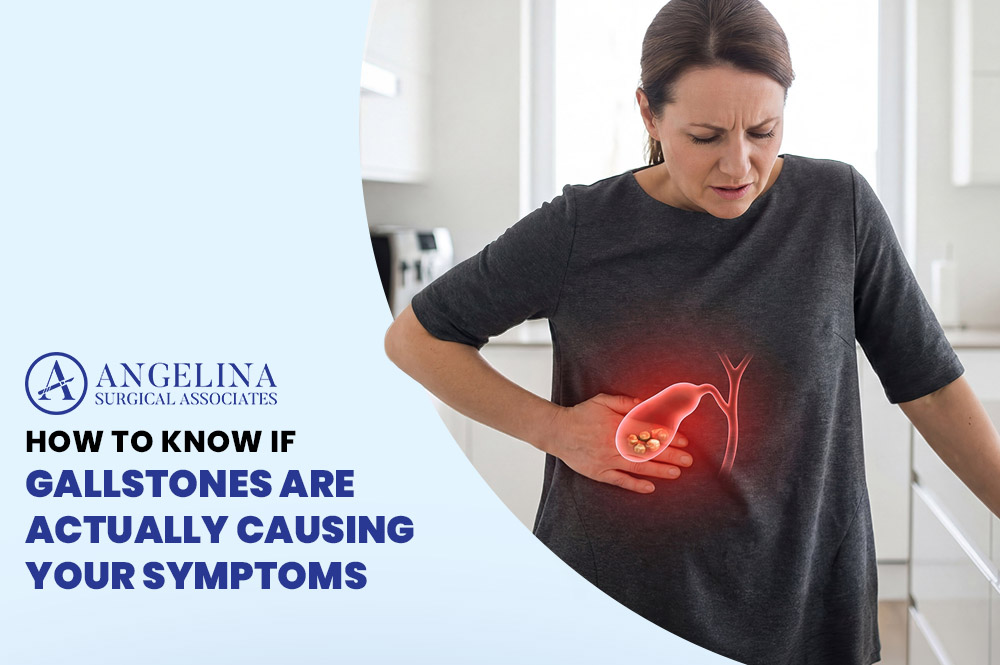
Overview: Think gallstones are causing your symptoms? Learn how gallstone pain feels, common warning signs, and when symptoms may point elsewhere!
Gallstones are surprisingly common, but not everyone who has them experiences symptoms. In fact, many people discover gallstones incidentally during imaging for an unrelated issue. So when abdominal discomfort, nausea, or bloating develops, an important question often follows: Are gallstones truly the cause?
The answer is not always straightforward. Digestive symptoms can overlap across multiple conditions, and not every stomach ache points to the gallbladder. Understanding how gallstone symptoms typically behave can help patients recognize when the gallbladder may actually be involved.
What Does Gallstone Pain Usually Feel Like?
Gallstone-related pain often follows a recognizable pattern. Many patients describe discomfort beneath the ribs on the upper right side of the abdomen, though some feel it more centrally in the upper stomach area. The pain may build gradually or come on suddenly, especially after eating heavier meals.
Unlike general indigestion, gallstone pain tends to feel deeper and more intense. Some people describe it as pressure, tightness, or a squeezing sensation rather than a burning feeling. The discomfort can also radiate into the back or toward the right shoulder blade, which sometimes makes the source harder to identify at first.
Episodes may last anywhere from several minutes to a few hours before easing again.
Why Do Symptoms Often Happen After Eating?
The gallbladder plays an important role in digestion by releasing bile to help break down fats. After eating, particularly after greasy or fatty meals, the gallbladder contracts to push bile into the digestive tract.
If gallstones interfere with that process, pressure can build inside the gallbladder, leading to pain, nausea, or bloating. This is why many patients notice symptoms worsening after foods like fried meals, creamy dishes, or large portions.
Not everyone reacts to the same foods, but recurring discomfort after meals is one of the more common clues that the gallbladder may be involved.
Can Gallstones Cause Symptoms Beyond Abdominal Pain?
Yes, and this is often where things become less clear.
Gallstones may also contribute to:
-
Nausea or vomiting
-
Bloating or excessive fullness
-
Indigestion-like discomfort
-
Pain that comes and goes unpredictably
The problem is that reflux, gastritis, ulcers, IBS, and even stress-related digestive symptoms can overlap with these complaints. Some patients are surprised to learn their symptoms are unrelated to the gallbladder despite having stones present on imaging.
This is why diagnosis depends on the pattern of symptoms, not just the presence of gallstones alone.
When Could Gallstones Be Causing Something More Serious?
Certain symptoms suggest that gallstones may be causing inflammation or blockage requiring prompt medical attention.
Fever or Chills : These can indicate infection or gallbladder inflammation.
Yellowing of the Skin or Eyes : Jaundice may occur if a stone blocks the bile ducts.
Severe or Persistent Pain
Pain lasting several hours, especially with vomiting or fever, should not be ignored.
These symptoms may signal complications such as cholecystitis or bile duct obstruction.
How Do Doctors Confirm Gallstones Are the Real Cause?
Diagnosis usually involves combining imaging results with the patient’s symptom history and physical exam findings.
Ultrasound is commonly used to detect gallstones, but doctors also look for signs of inflammation, blockage, or tenderness around the gallbladder. In some cases, additional testing may be needed to rule out other digestive conditions that can mimic gallbladder symptoms.
The goal is not simply to find gallstones but to determine whether they are truly responsible for what the patient is experiencing.
Also Read >> Gallstones: Symptoms, Causes, & Treatment
When Is Gallbladder Surgery Actually Recommended?
Surgery is generally considered when gallstones are causing recurring symptoms or complications that interfere with quality of life.
For patients with occasional mild symptoms, monitoring or further evaluation may be appropriate. But when attacks become frequent, painful, or unpredictable, removing the gallbladder often provides lasting relief.
The decision is based less on the presence of stones themselves and more on how clearly those stones are affecting daily health and comfort.
Frequently Asked Questions (FAQs)
Can you have gallstones without symptoms?
Yes. Many people have silent gallstones that never cause discomfort or require treatment.
What foods commonly trigger gallstone symptoms?
Fatty, fried, or heavy meals are common triggers because they stimulate gallbladder contraction.
Do gallstones always require surgery?
No. Surgery is usually recommended only when gallstones are causing clear symptoms or complications.
Final Words
Gallstones can absolutely cause significant digestive symptoms—but not every episode of bloating, nausea, or abdominal pain points to the gallbladder. The timing, severity, and pattern of symptoms matter just as much as imaging results.
That’s why proper evaluation is so important. Understanding whether gallstones are truly responsible helps patients move toward the right treatment instead of unnecessary uncertainty.
Wondering whether gallstones are actually behind your symptoms?
Learn more or schedule a consultation with Angelina Surgical.