
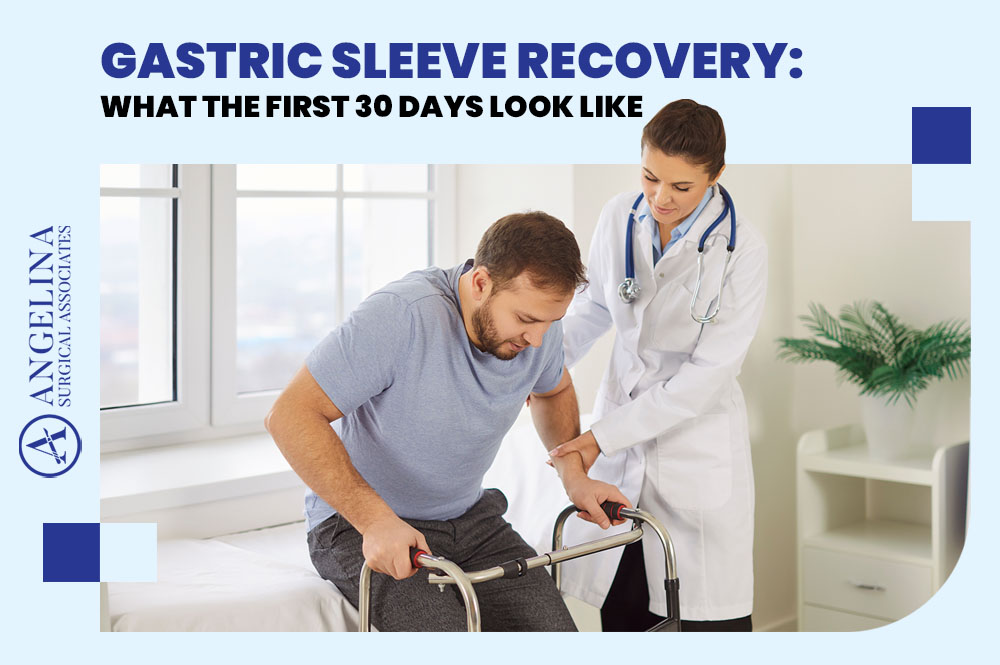
Overview: Gastric sleeve recovery explained. Learn what the first 30 days look like, including diet stages, healing timeline, and what to expect!
The decision to undergo gastric sleeve surgery is often made after careful thought, research, and a desire for lasting change. But once the procedure is complete, a new set of questions naturally takes over: What will recovery feel like? How quickly will things improve? Will I be able to adjust?
The first 30 days after Gastric Sleeve Surgery are not just about healing; they’re about transition. Your body is adapting to a new way of processing food, your energy levels are shifting, and your daily habits are beginning to change.
Understanding this early phase can help reduce uncertainty and give you a clearer sense of what lies ahead.
What Happens Immediately After Gastric Sleeve Surgery?
The first few days are focused on healing and monitoring. Most patients stay in the hospital for a short period, often one to two days, depending on their condition and recovery progress.
What You May Feel Early On
It’s normal to experience:
-
Mild to moderate soreness around the incision sites
-
Fatigue as your body begins healing
-
A feeling of tightness or fullness in the abdomen
Walking is encouraged early — often the same day or shortly after surgery to support circulation and reduce the risk of complications.
Also Read >> What to Expect After Gastric Sleeve Surgery
How Does the Diet Progress in the First 30 Days?
Diet progression is one of the most important parts of recovery. It happens in stages to allow the stomach to heal safely.
Week 1: Clear Liquids
Patients begin with clear liquids such as water, broth, and sugar-free drinks. Hydration is the priority during this stage.
Weeks 2–3: Full Liquids and Pureed Foods
Gradually, protein shakes, yogurt, and pureed foods are introduced. Portions are small, and eating slowly becomes essential.
Weeks 3–4: Soft Foods
Soft foods like scrambled eggs, soft vegetables, and tender proteins are added carefully. The focus remains on small portions and mindful eating.
Each stage prepares the body for the next, helping prevent discomfort and supporting proper healing.
When Does Energy Start to Return?
Energy levels often fluctuate during the first few weeks. Fatigue is common early on, especially as calorie intake is limited.
By the third or fourth week, many patients begin to feel more stable and notice gradual improvements in energy. Light daily activities become easier, and routine tasks feel more manageable.
What Physical Activity Is Safe During Recovery?
Movement is encouraged, but intensity should be limited.
Early Activity
Walking is the primary form of exercise in the first few weeks. It supports healing, improves circulation, and helps prevent stiffness.
Gradual Progression
Strenuous activity, heavy lifting, and core exercises are typically avoided for several weeks. Patients are gradually cleared for more activity based on healing progress.
What Changes Should You Watch For?
While recovery is usually smooth, certain symptoms should be monitored.
Contact your healthcare provider if you experience:
-
Increasing abdominal pain
-
Persistent nausea or vomiting
-
Fever or signs of infection
-
Difficulty staying hydrated
Early attention helps prevent complications and keeps recovery on track.
How Does the First Month Set the Stage for Long-Term Success?
The first 30 days after Gastric Sleeve Surgery are not just about healing; they’re about building habits.
Learning to eat slowly, prioritize protein, stay hydrated, and listen to your body lays the foundation for long-term weight loss and overall health improvement. These early routines often shape long-term success.
Frequently Asked Questions (FAQs)
How long does it take to feel normal after gastric sleeve surgery?
Most patients begin feeling more like themselves within a few weeks, though full adjustment takes longer.
Is it normal to feel tired after surgery?
Yes. Fatigue is common due to healing and reduced calorie intake.
When can I eat regular food again?
Regular foods are typically introduced gradually after the first month, based on your provider’s guidance.
Final Words
Recovery after gastric sleeve surgery is a gradual process, not an overnight transformation. The first month involves adjustment, patience, and steady progress.
With the right expectations and guidance, most patients move through this phase successfully and begin to see meaningful changes in both health and lifestyle.
Preparing for gastric sleeve surgery or navigating recovery? Learn more or schedule a consultation with Angelina Surgical.