
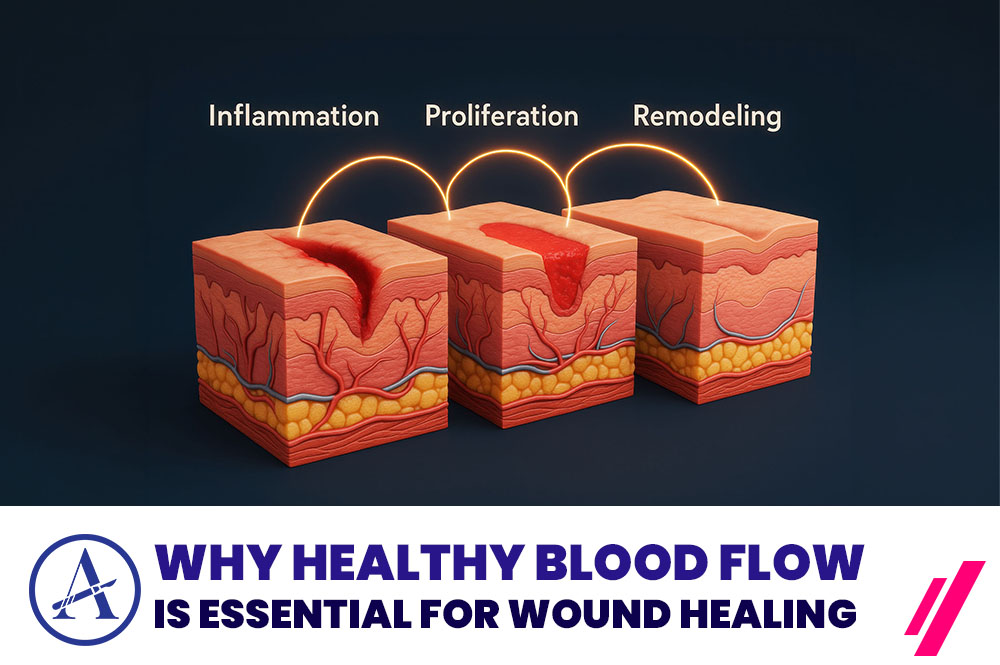
Overview: Healthy blood flow is vital for wound healing. Learn why circulation matters, what slows healing, and when specialized wound care is needed!
Most people think of wound healing as something that simply takes time. Clean the wound, keep it covered, and eventually it should heal. But healing is far more complex than that.
Behind the scenes, your body relies on a continuous supply of oxygen, nutrients, and immune cells to repair damaged tissue, and all of these are delivered through healthy blood flow.
When circulation is compromised, even a small wound can struggle to heal. Instead of steadily improving, it may remain open for weeks, become infected, or develop into a chronic wound that requires specialized care.
Understanding the role of blood flow helps explain why some wounds heal quickly while others need additional medical attention.
Why Does Blood Flow Matter So Much During Healing?
Every stage of wound healing depends on circulation.
When the skin is injured, blood immediately begins delivering platelets to stop the bleeding. Soon after, oxygen, proteins, growth factors, and white blood cells travel to the wound to fight bacteria and begin rebuilding tissue.
As healing continues, blood vessels help carry the nutrients needed to form new skin and strengthen the repaired area.
Without adequate circulation, this entire process slows down. The body simply cannot repair tissue efficiently if it doesn’t receive the resources it needs.
What Happens When Blood Flow Is Reduced?
Poor circulation doesn’t always cause obvious symptoms at first, but it can have a significant impact on wound healing.
A wound with limited blood supply may:
-
Heal much more slowly than expected
-
Develop repeated infections
-
Remain open despite routine wound care
-
Produce little or no healthy new tissue
-
Become larger instead of smaller over time
Rather than moving through the normal stages of healing, the wound becomes “stuck,” making recovery much more difficult without addressing the underlying circulation problem.
Which Conditions Can Affect Circulation and Delay Healing?
Several medical conditions can reduce blood flow and increase the risk of chronic wounds.
Diabetes
Diabetes can damage both blood vessels and nerves. Reduced circulation limits the delivery of oxygen to injured tissue, while nerve damage may prevent patients from noticing injuries before they worsen.
Peripheral Artery Disease (PAD)
Peripheral artery disease narrows the arteries that supply blood to the legs and feet. Even minor cuts or pressure injuries can become difficult to heal because of the reduced blood supply.
Venous Insufficiency
Healthy healing also depends on blood returning to the heart efficiently. When veins struggle to move blood upward, fluid can collect in the lower legs, increasing pressure and slowing tissue repair.
Smoking, advanced age, heart disease, and certain autoimmune conditions may also interfere with healthy circulation.
Can You Tell If Poor Circulation Is Affecting a Wound?
Sometimes the signs are subtle.
You should seek medical evaluation if a wound:
-
Has not improved after several weeks
-
Feels unusually cold around the surrounding skin
-
Develops black or dark tissue
-
Produces increasing drainage or odor
-
Is accompanied by leg pain while walking or at rest
These symptoms don’t always indicate poor circulation, but they do suggest the wound needs a more comprehensive evaluation.
How Is Blood Flow Evaluated During Wound Care?
When a wound isn’t healing as expected, treating the surface alone may not be enough.
Healthcare providers may evaluate circulation through a physical examination, pulse assessment, ultrasound studies, or vascular testing. Understanding how well blood reaches the affected area helps determine the most appropriate treatment plan.
If poor circulation is contributing to delayed healing, improving blood flow often becomes an essential part of successful wound care.
Also Read >> Poor Blood is Often Missed as Cause of Non-Healing Wounds
Supporting Better Circulation for Better Healing
While some circulation problems require medical treatment, healthy daily habits also support wound healing.
Patients are often encouraged to:
-
Keep blood sugar under good control if they have diabetes
-
Avoid smoking
-
Stay physically active when medically appropriate
-
Follow wound care instructions carefully
-
Attend regular follow-up appointments
These steps cannot replace specialized treatment when circulation is severely impaired, but they can help create the best environment for healing.
Frequently Asked Questions (FAQs)
How does poor circulation slow wound healing?
Reduced blood flow limits the oxygen, nutrients, and immune cells needed to repair damaged tissue, making healing slower and increasing the risk of infection.
Can improving circulation help a chronic wound heal?
Yes. When poor circulation is contributing to delayed healing, treating the underlying blood flow problem is often an important part of successful wound care.
Who is most at risk for circulation-related wound problems?
People with diabetes, peripheral artery disease, venous insufficiency, heart disease, or a history of smoking are at higher risk for wounds that heal slowly.
Final Words
Healthy blood flow is one of the body’s most powerful tools for repairing damaged tissue. Without it, wounds may struggle to heal, increasing the risk of infection, prolonged discomfort, and serious complications.
If you have a wound that isn’t improving—or one that keeps returning—it’s important to look beyond the surface. Identifying circulation problems early can make a meaningful difference in healing and help prevent more complex issues down the road.
Concerned about a wound that isn’t healing properly?
The experienced team at Angelina Surgical provides comprehensive wound care to help identify the cause and create a personalized treatment plan.