
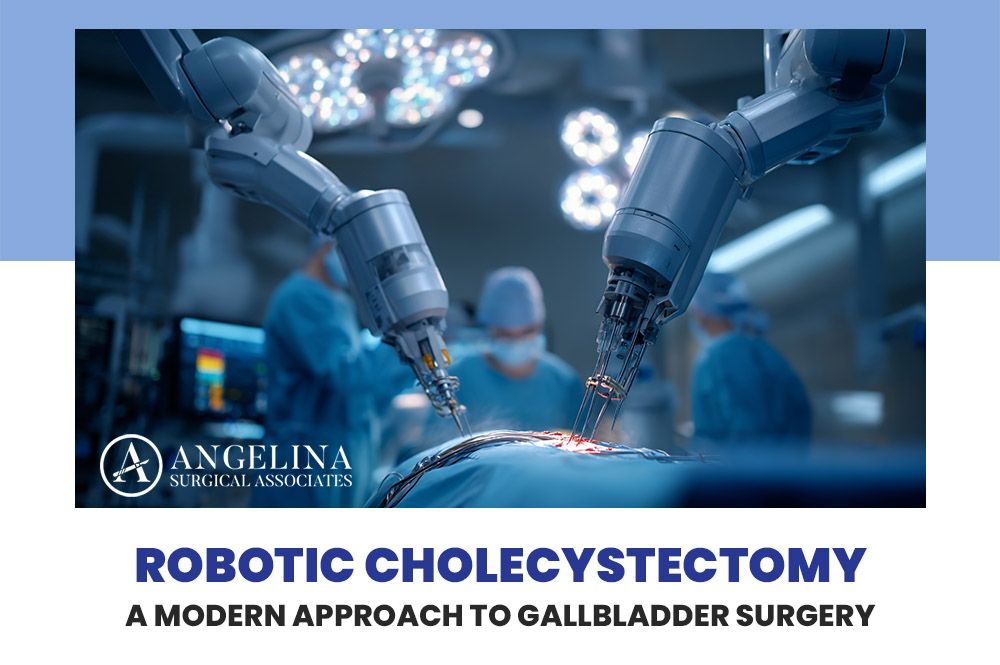
Overview: Learn how robotic cholecystectomy works, its benefits, recovery expectations, and why it’s becoming a modern option for gallbladder surgery!
Gallbladder problems rarely stay convenient for long. What may begin as occasional discomfort after meals can gradually turn into sudden pain attacks, nausea, bloating, or constant worry about when symptoms will strike again. For many patients, gallstones and gallbladder disease eventually begin affecting daily routines, eating habits, sleep, and overall quality of life.
When surgery becomes part of the conversation, patients often want more than just relief; they want reassurance. They want to understand how the procedure works, what recovery looks like, and whether newer surgical approaches actually make a meaningful difference.
That’s where robotic cholecystectomy enters the discussion. As minimally invasive surgery continues to evolve, robotic-assisted gallbladder removal has become an increasingly common option for patients seeking a modern approach to treatment.
What Is a Robotic Cholecystectomy?
A robotic cholecystectomy is a minimally invasive procedure used to remove the gallbladder using robotic-assisted surgical technology.
The procedure is commonly performed for:
-
Symptomatic gallstones
-
Chronic gallbladder inflammation
-
Biliary dyskinesia
-
Gallbladder attacks causing pain or digestive symptoms
During surgery, the surgeon controls robotic instruments from a nearby console. The robotic system does not perform the surgery independently—it responds entirely to the surgeon’s movements in real time.
How Is Robotic Gallbladder Surgery Different From Traditional Surgery?
Traditional open gallbladder surgery requires a larger abdominal incision. Robotic surgery, by contrast, uses several small incisions through which instruments and a camera are inserted.
What distinguishes robotic surgery from standard laparoscopy is the level of visualization and instrument control.
The robotic platform provides:
-
High-definition, three-dimensional visualization
-
Enhanced precision in confined spaces
-
Greater flexibility of instrument movement
-
Improved control during delicate dissection
This can be particularly helpful around the bile ducts and surrounding anatomy, where precision matters greatly.
Why Are Many Patients Interested in Minimally Invasive Gallbladder Surgery?
For many patients, the appeal of minimally invasive surgery is tied to recovery.
Smaller incisions often mean:
-
Less postoperative discomfort
-
Reduced scarring
-
Shorter hospital stays
-
Earlier return to normal activities
Many robotic gallbladder procedures are performed on an outpatient basis, allowing patients to return home the same day depending on their recovery and overall condition.
Does Robotic Surgery Make Gallbladder Removal Safer?
Safety depends first and foremost on proper surgical judgment and experience. However, robotic-assisted technology may help support precision during surgery by improving visibility and instrument control.
The da Vinci® robotic system is widely used across multiple surgical specialties and has become an established part of minimally invasive surgery.
According to the U.S. Food and Drug Administration (FDA), robotic surgical systems are cleared for use in a variety of procedures when operated by appropriately trained surgeons.
The technology itself is a tool—the surgeon remains fully responsible for every aspect of the procedure.
What Is Recovery Like After Robotic Cholecystectomy?
Most patients are encouraged to walk shortly after surgery and gradually resume normal activity over the following days.
It’s common to experience:
-
Mild soreness around incision sites
-
Temporary fatigue
-
Minor bloating or digestive adjustment
Many patients return to light activity within about a week, though full recovery timelines vary depending on the individual and the complexity of the surgery.
Dietary adjustments are usually temporary as the body adapts to the absence of the gallbladder.
When Is Gallbladder Surgery Usually Recommended?
Gallbladder removal is typically considered when symptoms become recurrent, disruptive, or associated with complications.
These may include:
-
Repeated gallbladder attacks
-
Persistent upper abdominal pain
-
Inflammation or infection
-
Bile duct blockage
-
Digestive symptoms linked to gallbladder dysfunction
The goal is not simply to remove the gallbladder—it’s to improve quality of life and prevent future complications.
Frequently Asked Questions (FAQs)
Is robotic gallbladder surgery painful?
Most patients experience mild to moderate soreness rather than severe pain, especially compared to traditional open surgery.
How long does robotic gallbladder surgery take?
The procedure typically takes about one to two hours, depending on complexity.
Can you live normally without a gallbladder?
Yes. Most people adapt well and return to a normal lifestyle after recovery.
Final Words
Robotic cholecystectomy represents a modern, minimally invasive approach to gallbladder surgery that combines surgical expertise with advanced technology.
For many patients, it offers an effective treatment option with smaller incisions, careful precision, and a smoother recovery experience. Most importantly, it provides a path toward lasting relief from recurring gallbladder symptoms that can gradually interfere with everyday life.
Experiencing gallbladder symptoms or exploring surgical options? The professionals at Angelina Surgical got you covered.